Venezuelan Regime Sets 20-Year Prison Terms for Those Promoting 'Piracy and Blockades' As U.S. Escalates Pressure
The law also authorizes fines tied to foreign exchange rates and allows for asset seizure under Venezuela's forfeiture statutes.
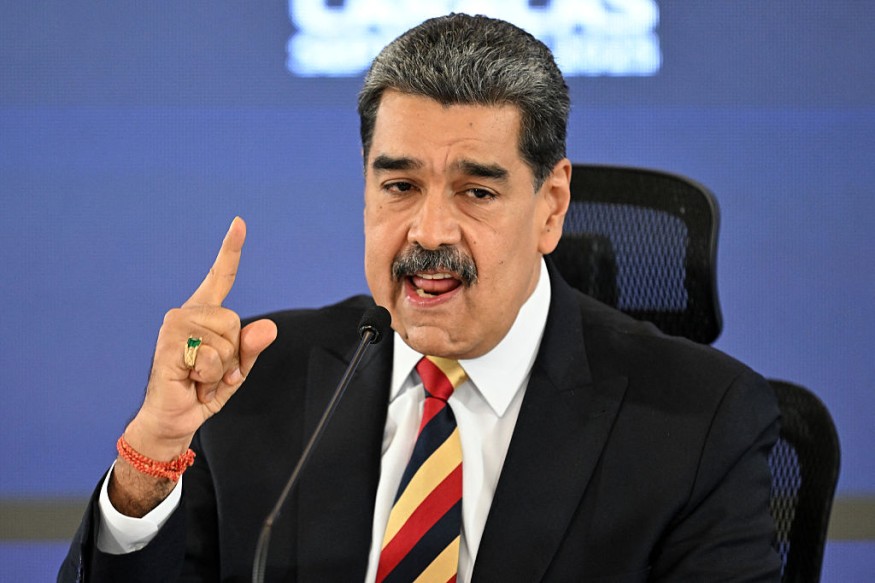
Venezuela's National Assembly, controlled by allies of Nicolás Maduro, approved legislation this week establishing prison sentences of up to 20 years for individuals who promote, support or finance acts described by the government as "piracy" or economic blockades against the country.
The law was passed as the United States intensifies pressure on Caracas, including the interception and seizure of Venezuelan oil tankers in the Caribbean.
The legislation, approved unanimously on Tuesday, is titled the Law for the Protection of the Freedoms of Navigation and Commerce Against Piracy, Blockades and Other Illicit International Acts. National Assembly President Jorge Rodríguez declared the law enacted at the conclusion of the debate, as local news site El Pitazo reports.
Under Article 13, anyone who "promotes, instigates, solicits, invokes, favors, facilitates, supports, finances or participates" in acts of piracy or blockades targeting companies that conduct business with the Venezuelan state may face prison terms of 15 to 20 years. The law also authorizes fines tied to foreign exchange rates and allows for asset seizure under Venezuela's forfeiture statutes.
Lawmakers said the measure is intended to protect Venezuela's commercial activity and economic sovereignty. Legislator Giuseppe Alessandrello said the law seeks to defend Venezuelans from what he described as "acts of depredation" by the United States, citing Washington's recent naval operations and the seizure of sanctioned oil shipments.
The government argues the law is grounded in international frameworks such as the 1958 Geneva Convention on the High Seas and the United Nations Charter.
The vote follows a series of U.S. actions aimed at restricting Venezuelan oil exports. President Donald Trump announced earlier this month that Washington would block sanctioned tankers entering or leaving Venezuela. U.S. authorities have since seized multiple vessels allegedly carrying sanctioned crude, including the Skipper tanker on Dec. 10, and have sought to intercept others as part of an expanded military deployment in the Caribbean.
Venezuela's government has accused the United States of seeking regime change and control over its oil reserves. Speaking at the United Nations Security Council, Venezuela's ambassador Samuel Moncada said the U.S. was acting "outside of international law," adding the "the threat is not Venezuela, the threat is the U.S. government."
Russia and China criticized the U.S. actions, while Washington defended them as part of efforts to weaken what it calls Maduro's "illegitimate regime."
The new law also comes amid heightened concern over Venezuela's internal human rights situation. U.N. High Commissioner for Human Rights Volker Türk warned last week that conditions in the country had deteriorated in recent months, citing increased repression, arbitrary detentions and restrictions on fundamental freedoms.
Türk also cautioned that escalating external pressure risked leaving civilians "caught in the crossfire," urging all parties to prioritize the protection of ordinary Venezuelans.
Originally published on Latin Times
Subscribe to Latin Post!
Sign up for our free newsletter for the Latest coverage!
© 2025 Latin Post. All rights reserved. Do not reproduce without permission.


