Fidel Castro’s Grandson Claims ‘The Majority Of Cubans Want To Be Capitalist, Not Communist’
“We have to open the economic model, eliminate the bureaucracy,” said Sandro Castro in an interview with CNN
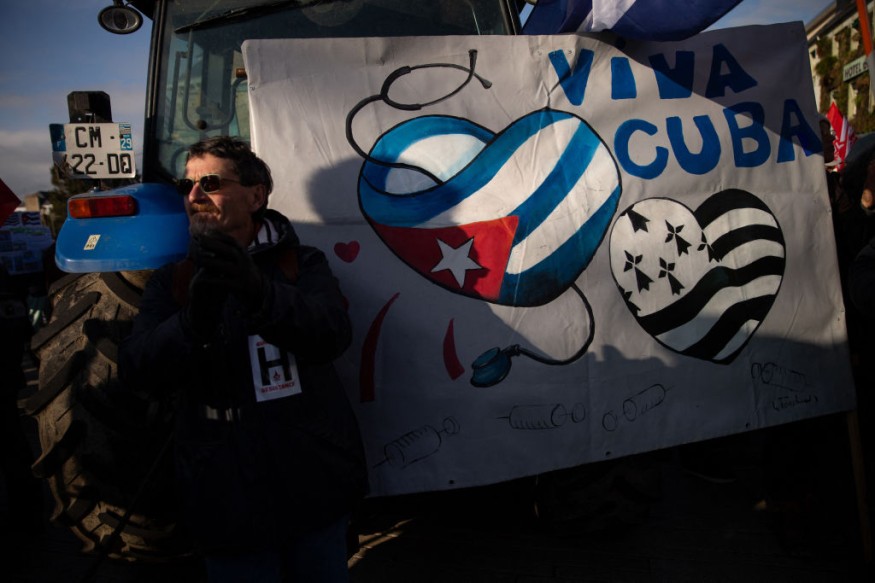
Sandro Castro, grandson of Fidel Castro, criticized aspects of the Cuban regime as the Trump administration continues to put pressure on the island to achieve structural changes.
Speaking to CNN in Cuba, Castro, who has amassed over a hundred thousand followers on social media, highlighted harsh economic conditions in the country and said he doesn't believe President Miguel Diaz-Canel "is doing a good job."
"You suffer thousands of problems. In a day, there might not be electricity, no water. Goods don't arrive. It's so hard, really hard," he said.
Elsewhere, Castro described himself as a "revolutionary," but said he is one of "ideas, of change." "There are many people in Cuba that think in a capitalistic way. There are many people here who want to do capitalism with sovereignty," Castro claimed. "I think the majority of Cubans want to be capitalist, not communist."
Sandro is not the same member of the Castro family who is having conversations with the Trump administration about the future of the island. The other one is Raul Guillermo Rodriguez Castro, grandson of Raul Castro and great-nephew of Fidel.
He has appeared alongside senior Cuban officials in recent meetings and is now acting as an interlocutor in discussions with U.S. counterparts.
The emergence of Rodríguez Castro comes as the United States signals interest in broader negotiations over Cuba's political and economic future. According to reporting in early March, U.S. officials have explored potential reforms with figures connected to the Cuban leadership, including Rodríguez Castro, and have raised concerns about President Miguel Díaz-Canel, whom one source described as "an obstacle" to change.
Discussions have reportedly included the possibility of easing sanctions in exchange for reforms, though any leadership shift would represent a significant break with Cuba's longstanding emphasis on institutional continuity.
These developments are unfolding against a deepening economic and humanitarian crisis on the island. Fuel shortages, power outages and declining access to basic goods have intensified public discontent, while recent protests and acts of unrest signal growing strain. Analysts consulted by El País over the weekend describe a government "totally weakened," facing what some characterize as an existential challenge as external pressure increases.
President Trump has publicly suggested a more assertive approach, stating he could have the "honor" of "taking Cuba in some form."
Originally published on Latin Times
Subscribe to Latin Post!
Sign up for our free newsletter for the Latest coverage!
© 2026 Latin Post. All rights reserved. Do not reproduce without permission.


