Sheinbaum Warns of Sanctions After 2 U.S. Officials Die in Chihuahua, Says “There Is No Permission” for U.S. Operations
Two Mexican government officials also died when returning from a drug lab raid
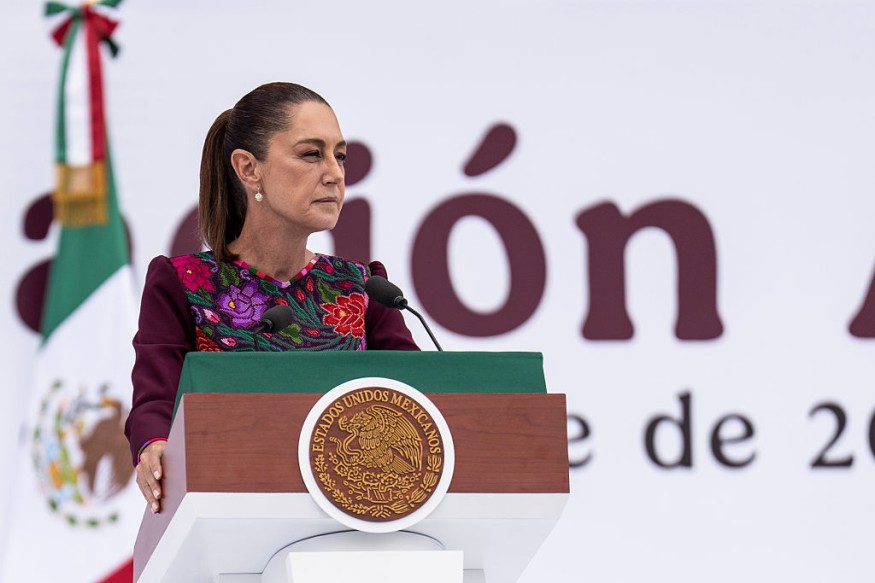
The deaths of two U.S. officials in Chihuahua have triggered more than a diplomatic response from Mexico. They have forced President Claudia Sheinbaum to publicly acknowledge a deeper concern: local authorities may be coordinating with Washington without federal oversight.
"We did not have knowledge," Sheinbaum said during her morning press conference, referring to the involvement of U.S. personnel in the operation that ended in a fatal crash in northern Mexico.
The accident killed two American officials linked to the U.S. Embassy and two Mexican state officials after an anti-cartel mission targeting clandestine drug laboratories in the municipality of Morelos, Chihuahua. What initially appeared to be a tragic operational incident quickly escalated into a political issue once the level of U.S. participation became clear.
"There is no permission for foreign agents to participate in operations in our country," Sheinbaum said, drawing a firm line on Mexico's position regarding sovereignty and security cooperation.
Her comments marked the first time she directly suggested that Mexican local governments may have acted independently in coordinating with U.S. authorities. While Mexico maintains intelligence-sharing agreements with the United States, Sheinbaum emphasized that operational involvement must be authorized at the federal level.
"We are going to investigate if there was any violation of national sovereignty," she added, confirming that her administration has opened a formal review into the events surrounding the operation.
🗣️ "No estábamos enterados"
— El Universal (@El_Universal_Mx) April 20, 2026
🇺🇸 🇲🇽 Claudia Sheinbaum lamentó la muerte de dos agentes de la embajada de Estados Unidos en Chihuahua. Además, indicó que están investigando si el operativo violó la Ley de Seguridad Nacional; "no hay operaciones conjuntas" entre países, recalcó la… pic.twitter.com/oLzRk50Dn0
The crash took place after authorities moved against illegal drug labs in a region long affected by organized crime. Two Mexican officials were also killed, including senior personnel from Chihuahua's investigative agency. The U.S. Embassy confirmed the deaths of its personnel but has not detailed the precise nature of their role in the operation.
🚨🚨BREAKING: Two US Embassy employees and two Mexican officials who were returning from a joint U.S.-Mexico operation to destroy clandestine drug labs in the Sierra Tarahumara region in Chihuahua, Mexico, died when their vehicle veered off a mountainous road into a ravine. The… pic.twitter.com/BVYmohZV1k
— Plein Crazy (@PleinCrazy) April 19, 2026
The political implications, however, are already unfolding.
Sheinbaum has repeatedly defended cooperation with Washington while rejecting the idea of direct U.S. intervention in Mexican territory. Her administration has maintained that while intelligence sharing is essential in combating transnational crime, operational control must remain firmly in Mexican hands.
Monday's revelations complicate that position.
If local authorities in Chihuahua coordinated directly with U.S. officials without notifying the federal government, it raises questions not only about protocol but about control. It suggests that parallel security channels may exist between U.S. agencies and state-level governments, especially in regions heavily impacted by cartel activity.
That is the larger issue now confronting Sheinbaum.
The president requested clarification from both the Chihuahua government and the U.S. Embassy and confirmed that a meeting would take place between U.S. Ambassador Ronald Johnson and Mexican officials to establish exactly what happened.
"We need to know under what framework this participation occurred," she said.
The case comes at a sensitive moment in U.S.-Mexico relations. President Donald Trump has taken a more aggressive stance against cartels, including proposals that would expand U.S. involvement in regional security. Against that backdrop, Sheinbaum's response reflects a balancing act: maintaining cooperation while asserting limits.
For now, the deaths of two Americans have transformed a local operation into a national test of authority.
The crash raised immediate concerns. But Sheinbaum's words made clear the real stakes: not just what happened in Chihuahua, but who authorized it.
Originally published on Latin Times
Subscribe to Latin Post!
Sign up for our free newsletter for the Latest coverage!
© 2026 Latin Post. All rights reserved. Do not reproduce without permission.


