Columbia’s Presidential Search Drags Into 2026 as University Faces Fourth Leader in Three Years
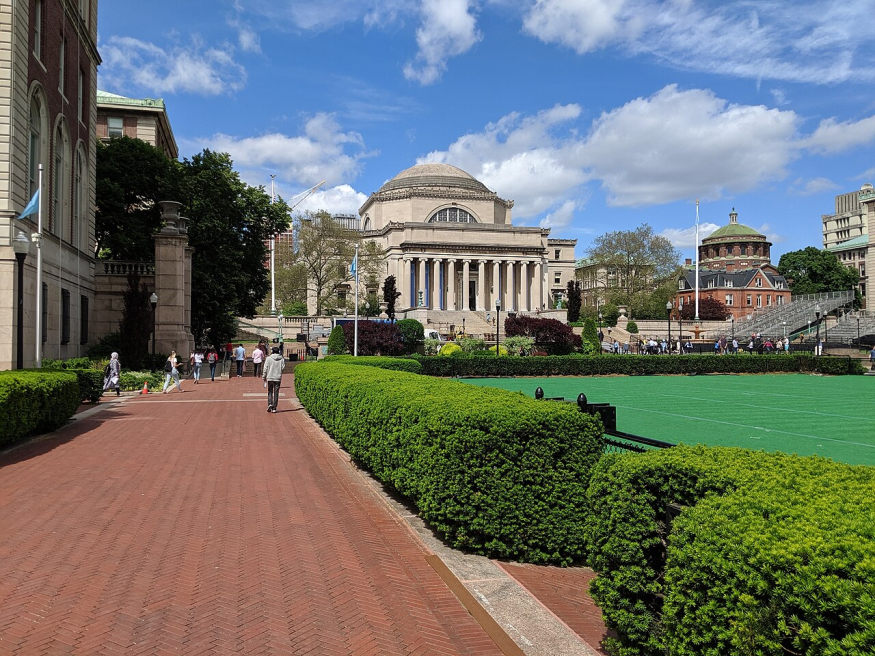
Columbia University has indefinitely extended its search for a permanent president, pushing past a January 1, 2026 deadline and stretching what has become the longest presidential hunt at the Ivy League institution since 1948—a delay that underscores the extraordinary difficulty of filling what higher education observers are calling "one of the toughest jobs" in American academia.
The postponement, announced in early December by board co-chair David Greenwald and three other Columbia affiliates leading the search, offers no new target date and acknowledges that finding someone willing and able to navigate the university's perfect storm of challenges has proven far more difficult than anticipated.
"The importance of this decision warrants taking the additional time necessary to fully understand each candidate's strengths and potential fit for Columbia, and to identify the individual best suited to lead Columbia into its next era," the statement said, framing the delay as deliberate and thoughtful rather than desperate—though the subtext is clear: Columbia is struggling to close a deal.
The extended search leaves Columbia seeking its fourth president in just three years, after losing two leaders in the past 16 months to campus turmoil that has made the position appear increasingly untakeable to qualified candidates who presumably have other, less fraught options.
A Position Nobody Wants
While the search committee hasn't publicly confirmed candidate withdrawals, Bloomberg reported that the process has extended as Columbia works to find someone willing to accept what may be the most challenging presidency in American higher education.
The challenges facing Columbia's next president read like a worst-case scenario for university leadership:
Trump Administration Pressure: Multiple federal agencies are investigating Columbia over alleged antisemitism. The Trump administration froze $400 million in federal research funding in March 2025, forcing the university into a $200 million settlement that required sweeping policy changes and commitments that faculty view as compromising academic autonomy.
Campus Polarization: Gaza-related protests in spring 2024 tore the campus apart, with extended encampments, building occupations, and confrontations that drew national attention and congressional investigation. Any new president will inherit a deeply divided community where virtually any response to Israeli-Palestinian issues will enrage substantial portions of students, faculty, alumni, and donors.
Faculty Skepticism: Labor unions representing professors sued the Trump administration over funding revocation, accusing it of leveraging funds to compel speech restrictions. Faculty members are wary of leadership that might capitulate to political pressure, creating tension with trustees and donors who want stability and reduced controversy.
Interim President Unpopularity: Acting President Claire Shipman's unpopularity was on display at Columbia's most recent graduation ceremony, when her speech was drowned out by heckles and boos. The next permanent president inherits not just institutional challenges but a community accustomed to expressing open contempt for university leadership.
Congressional Scrutiny: House Committee on Education and the Workforce Chair Tim Walberg has warned he'll be "watching" Columbia's next moves, with his committee demanding detailed student disciplinary records and maintaining active oversight that could trigger hearings if the new president makes moves Republicans disapprove of.
Financial Uncertainty: While Columbia's endowment remains substantial, the $200 million settlement payment, potential loss of federal research funding, and donor backlash from multiple directions create budget pressures that limit the new president's flexibility.
What qualified academic or administrator looks at this combination and thinks: "Yes, this is the job for me"?
The Leadership Revolving Door
Columbia's presidential instability began with Lee Bollinger's 2023 departure after serving as the university's 19th president since 2002—the longest-serving Ivy League president at the time he stepped down.
Minouche Shafik (2023-August 2024): Bollinger's successor lasted barely over a year before resigning amid intense criticism of her handling of Gaza protests. Shafik appeared before a hostile congressional hearing where her responses failed to satisfy either progressive faculty who thought she was too aggressive toward protesters or conservatives who thought she was too tolerant of antisemitism. Unable to satisfy anyone, she departed in August 2024.
Katrina Armstrong (August 2024-March 2025): The interim president, a physician and executive vice president for Health and Biomedical Sciences, stepped into the role temporarily. But when the Trump administration froze federal funding and demanded policy changes, Armstrong found herself negotiating the controversial $200 million settlement that required Columbia to implement mandatory antisemitism training, roll back some diversity programs, and accept ongoing federal monitoring. Faculty and community members viewed the settlement as capitulation. Armstrong stepped down in March 2025, returning to lead Columbia's Irving Medical Center.
Claire Shipman (March 2025-present): The current acting president, a journalist and Columbia alumna, has struggled with legitimacy from the start. The graduation ceremony where students heckled and booed her speech became a viral symbol of Columbia's dysfunction. She holds the position not because she was anyone's first choice but because someone had to run the institution while the search dragged on.
Three leaders in under three years, with two departures under pressure and one interim who never sought the permanent role. The pattern sends a clear message to potential candidates: Columbia presidencies don't end well.
What Columbia Wants vs. What Columbia Can Get
A campus-wide survey issued by the search committee over the summer revealed what the Columbia community believes the next president should prioritize:
- Supporting research and scholarship
- Affirming the school's commitment to academic freedom
- Recruiting and retaining impressive faculty
- Experience leading complex organizations
- Ability to navigate a polarized political environment
- Deep understanding of research and scholarship
The survey respondents essentially asked for a superhuman: someone with unimpeachable academic credentials, proven administrative success at similarly complex institutions, political dexterity to satisfy both progressive faculty and conservative investigators, commitment to academic freedom while also satisfying those demanding restrictions on certain speech, and the courage to stand firm on principles while also being flexible enough to make necessary compromises.
Oh, and this person should also be willing to take a job where the last three occupants left unhappily or were pushed out.
The gap between what Columbia wants and what qualified candidates might be willing to accept likely explains the extended search.
The Harvard Contrast
The contrast with Harvard, Columbia's peer institution that faced similar challenges, is instructive.
Harvard president Claudine Gay resigned in January 2024 following the same congressional hearing that doomed Columbia's Shafik. But Harvard quickly installed interim president Alan Garber, who has taken a more defiant approach to Trump administration demands.
Garber has fought in court rather than immediately settling, won important legal victories over federal funding freezes, and become "something of a folk hero on campus" according to press reports. Harvard's willingness to litigate rather than capitulate has bought goodwill with faculty even as it prolongs uncertainty.
Columbia, by contrast, chose rapid settlement—paying $200 million to end investigations and restore funding. That choice may have been financially prudent but politically toxic with faculty who view it as abandoning academic freedom under pressure.
Any new Columbia president must either defend the settlement and risk being viewed as complicit in surrendering institutional autonomy, or distance themselves from it and risk reopening conflicts with federal investigators. Neither option is appealing.
The 1948 Comparison
The search committee's statement noted this is Columbia's longest presidential search since 1948—a comparison that invites historical reflection.
In 1948, Columbia selected Dwight D. Eisenhower as president, a choice that seems bizarre in retrospect: a five-star general with no academic credentials leading an elite university. But Eisenhower's military leadership experience and national stature made him an attractive candidate in post-World War II America, and his Columbia tenure (1948-1953) preceded his election as U.S. president.
The comparison suggests Columbia is willing to consider non-traditional candidates—perhaps business leaders, government officials, or other prominent figures—if conventional academic administrators continue declining to pursue the position.
But the circumstances differ dramatically. Eisenhower came to Columbia at a moment of national confidence and university expansion. Today's Columbia needs someone to navigate contraction, conflict, and a hostile political environment. The skills required are fundamentally different.
Candidates Reportedly Reconsidering
While the search committee hasn't publicly confirmed which candidates were considered or withdrew, Bloomberg's reporting suggests the process has lost momentum as potential presidents reconsider whether Columbia is worth the professional and personal costs.
For any sitting university president or provost, leaving a stable position for Columbia requires weighing:
Career Risk: If Columbia remains tumultuous (likely), the presidency could end in forced resignation that damages future prospects. Academic careers depend on reputation; a failed Columbia presidency becomes a permanent stain.
Personal Cost: University presidencies require intense work under the best circumstances. Columbia's circumstances would mean constant crisis management, hostile media coverage, congressional hearings, donor confrontations, faculty votes of no confidence, and student protests. Some candidates presumably decided their families and personal well-being aren't worth the salary.
Limited Upside: Even if a Columbia president somehow navigates the challenges successfully, what's the reward? Columbia isn't going to rise in rankings or achieve dramatic breakthroughs while managing multiple crises. The best-case scenario is stabilizing an institution in crisis—admirable, but not career-defining in ways that might justify the risks.
Rational calculation suggests declining Columbia's offer, which may explain why the search drags on without resolution.
What Happens Now?
With no deadline for completing the search, Columbia faces indefinite uncertainty. Claire Shipman continues as acting president without the authority or mandate that comes with a permanent appointment. Major decisions get deferred pending permanent leadership. Faculty recruitment suffers. Students question institutional stability.
The extended search also creates cascade effects:
Other Universities: Institutions seeking presidents may find candidates more reluctant if Columbia's search demonstrates how difficult these roles have become. The higher education leadership pipeline may constrict as talented administrators decide the risks exceed the rewards.
Columbia's Reputation: Every month without a permanent president reinforces perceptions of institutional dysfunction. Prospective students and faculty consider whether to commit to an institution that can't even fill its top position.
Board Pressure: Trustees face mounting criticism for the extended search. If the delay continues into late 2026, board members themselves may face pressure to resign for failing to execute their most important responsibility.
The search committee's options are limited:
Compromise on Candidates: Accept someone who doesn't meet all criteria but is willing to take the job Expand Compensation: Offer salary and benefits sufficiently generous to overcome reluctance Promote from Within: Elevate a current administrator who knows Columbia's challenges Stay with Interim: Keep Shipman or find another interim leader and try again later Non-Traditional Choice: Recruit from outside traditional academia
None are ideal solutions, but the current situation—indefinite acting leadership while the search extends into a second year—may be worse than any of them.
The Longer View
Columbia University will eventually find a president. Someone will accept the position, whether because they believe they can succeed where others failed, because they need the career opportunity, or because Columbia offers sufficient compensation to overcome reluctance.
But the extended search reveals a troubling reality about higher education leadership in 2025: the job of running a major research university has become so difficult, so politically fraught, and so personally costly that highly qualified candidates are declining opportunities they once would have eagerly pursued.
If Columbia—an Ivy League institution with massive resources, global prestige, and premier location—struggles to attract candidates, what does that mean for less prestigious universities facing similar challenges?
The answer may be that university leadership becomes less professionalized, with institutions settling for less experienced administrators, shorter presidential tenures, and lower expectations for what presidents can accomplish. The era of transformational university leadership may be giving way to an era of crisis management and survival—with Columbia's extended search serving as the cautionary tale that began the transition.
For now, Claire Shipman holds the fort at Columbia, the search committee continues evaluating candidates without deadline pressure, and the university community waits to learn who will be brave or foolish enough to accept one of the toughest jobs in American higher education.
Originally published on University Herald
Subscribe to Latin Post!
Sign up for our free newsletter for the Latest coverage!
© 2026 Latin Post. All rights reserved. Do not reproduce without permission.


