Hailey Bieber Slammed for Outfit That 'Belongs in a Bedroom' During Wuthering Heights Australian Premiere
Hailey Bieber's fashion choice at the Sydney premiere of Wuthering Heights has sparked a fierce online debate, blending couture fashion with lingerie aesthetics.
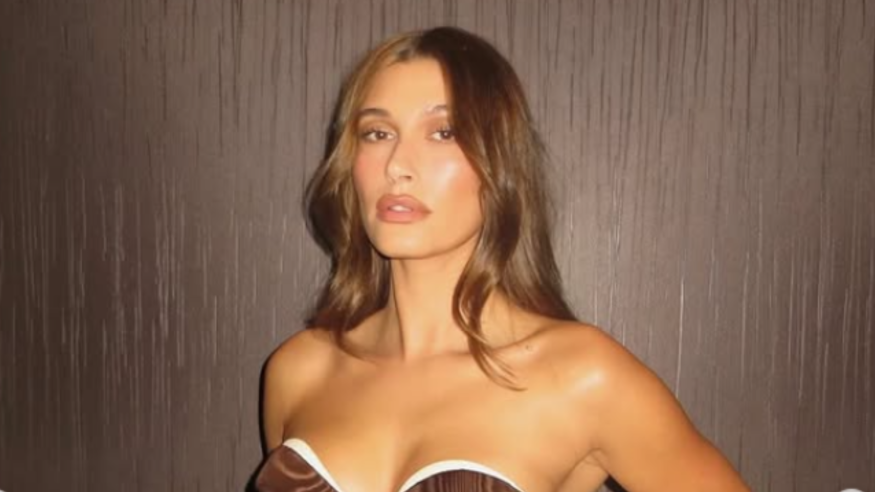
A daring red-carpet appearance by Hailey Bieber has ignited fierce debate online after critics said her outfit at the Australian premiere of Wuthering Heights looked more suited to 'a bedroom' than a cinema event.
The model and Rhode Beauty founder attended the Sydney premiere at the State Theatre, wearing a sheer black lace Saint Laurent gown that immediately became one of the most discussed celebrity fashion moments of the week.
Images from the event spread rapidly across social media platforms within hours, prompting both praise and pointed criticism. The controversy highlights the increasingly blurred boundary among couture fashion, lingerie aesthetics, and the expectations surrounding film premieres.
Red Carpet Appearance Draws Immediate Attention
According to event coverage originally published by E! Online, Bieber arrived in a floor-length Chantilly lace ensemble designed by Saint Laurent creative director Anthony Vaccarello, featuring a halter-style bralette, visible briefs, and dramatic bell sleeves, all aligned with the film adaptation's gothic tone.
Hailey Bieber attends the "Wuthering Heights" Australian Premiere.
— celebrity style (@celebrityOMG1) February 13, 2026
Click and support for more 👇👇https://t.co/OTec9TbI84pic.twitter.com/GdwPVH35RG
The outfit's transparency formed the centre of discussion. Fashion writers noted that the design deliberately embraced the ongoing 'naked dressing' trend, in which sheer fabrics and lingerie silhouettes appear in formal settings. Vogue described the look as a sensual interpretation of Victorian styling that nodded to the film's romantic themes while maintaining modern minimalism.
The premiere itself drew international attention due to the new cinematic adaptation of Emily Brontë's novel, directed by Emerald Fennell and starring Margot Robbie and Jacob Elordi. Coverage from Australia's ABC News confirmed Bieber's attendance among a high-profile guest list gathered ahead of the film's release.
Observers also noted that Bieber's appearance coincided with promotional engagements tied to the Australian expansion of her skincare brand Rhode, adding a commercial dimension to the red-carpet moment.
Social Media Backlash Intensifies
Criticism escalated rapidly after users on X (formerly Twitter) circulated images alongside harsh commentary. One widely shared post described the ensemble as 'an outfit that belongs in a bedroom, not at a movie premiere', while another accused the model of maintaining an 'obsession with dressing like a Victoria's Secret model.'
this outifit belongs in a bedroom, not at a movie premiere. she has no aura, no vibes, no personality. her ability to always not serve is insane. https://t.co/Unry20WhO6
— . (@selovelenaa) February 12, 2026
The posts garnered thousands of interactions, reflecting a recurring pattern in celebrity fashion discourse in which aesthetic criticism blends with broader personal commentary. Researchers studying online celebrity culture have noted that fashion often becomes a proxy for debates about authenticity, relevance, and perceived personality traits.
Public reaction, however, remained divided. Comment sections on official promotional posts reflected admiration alongside criticism, with some users praising the confidence and styling, while others questioned whether the look aligned with the tone of a literary film premiere.
Fashion analysts have long argued that controversy itself amplifies visibility. The rapid circulation of Bieber's appearance illustrates how social platforms now function as immediate arbiters of red-carpet success or failure, often within minutes of an event concluding.
Fashion Trends, Branding, And Celebrity Identity
Bieber's choice reflects a broader shift in luxury fashion toward lingerie-inspired eveningwear. Designers increasingly present sheer lace and exposed underlayers as high fashion rather than private attire, challenging distinctions between intimacy and public presentation.
Hailey Bieber’s pathetic obsession with dressing like a Victoria’s Secret model is hitting peak cringe. ever since the agency rejected her, she’s been living full-time in her delusional fantasy. 💀 https://t.co/scaIsUV3a8 pic.twitter.com/MJjq0feMQ1
— blair pop (honestly) ⍟ (@everypinkr) February 13, 2026
Industry commentary surrounding the premiere highlighted how Bieber has developed a recognisable red-carpet signature centred on minimalist beauty styling paired with provocative silhouettes. Fashion coverage noted that the Sydney appearance pushed that aesthetic further than previous outings, positioning the look as one of her most revealing to date.
The timing also matters. Celebrity appearances often serve as extensions of brand marketing, and Bieber's Australian visit coincided with promotional activities tied to Rhode's retail rollout. Fashion visibility during international launches often serves strategic purposes, ensuring global media coverage beyond traditional advertising channels.
Yet the backlash stresses a persistent tension in celebrity image management. While fashion houses increasingly reward bold experimentation, audiences still apply contextual expectations depending on the setting. Film premieres historically favour thematic elegance over overt sensuality, and departures from that convention can provoke strong reactions.
The intensity of online responses reveals how celebrity fashion commentary has evolved into participatory culture. Social media users no longer simply observe red-carpet moments; they actively shape public narratives around them.
Digital platforms amplify extreme viewpoints because controversy travels faster than consensus. Negative commentary often gains traction through humour, exaggeration, or meme-driven language, which can overshadow nuanced discussion about design intent or artistic interpretation.
Despite backlash cycles, such moments rarely damage fashion influence in measurable terms. Visibility, even when contentious, sustains relevance in an industry driven by attention metrics and algorithmic reach.
Originally published on IBTimes UK
Subscribe to Latin Post!
Sign up for our free newsletter for the Latest coverage!
© 2026 Latin Post. All rights reserved. Do not reproduce without permission.


