Hillary Clinton Breaks Silence on Epstein Files, Calls Meetings with Ghislaine Maxwell ‘Incidental’
Clinton clarifies her interactions with Maxwell, highlighting the incidental nature of their meetings.
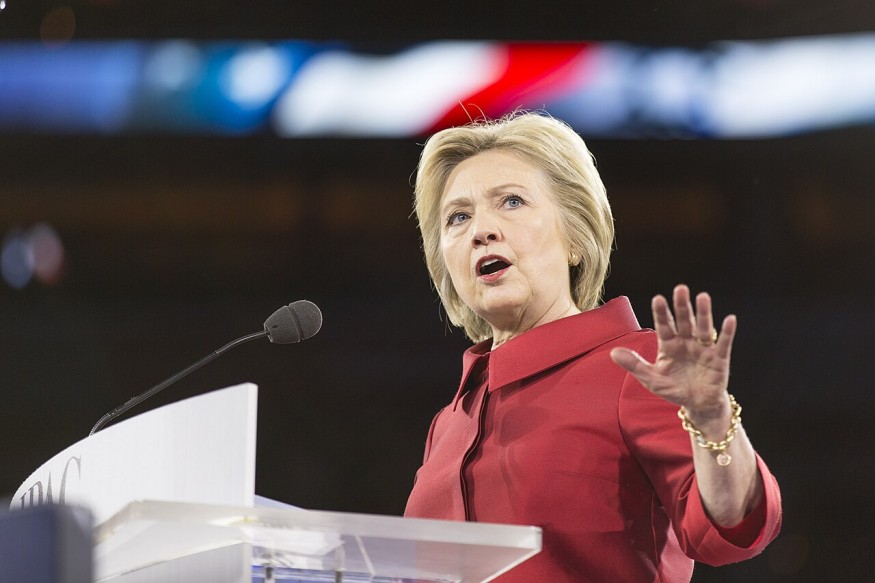
Hillary Clinton's name shows up early in the freshly unsealed Jeffrey Epstein court documents, but it's the kind of detail that launches conspiracy threads rather than resolves them: references to meetings, events, photographs with Ghislaine Maxwell.
For years, that murky association has been left to the internet's least charitable imagination.
Now, Clinton has finally addressed it head on, and she sounds more exasperated than contrite.
Speaking at a live event with author Heather McGhee, the former US secretary of state and 2016 presidential candidate was asked directly about her links to Maxwell in light of the latest Epstein filings.
Her answer was brisk, almost weary: yes, she had crossed paths with Maxwell, she said, but those meetings were 'incidental,' and no, there was no secret friendship or shadowy alliance behind the photographs.
In other words: wrong place, wrong social circle, wrong billionaire.
Hillary Clinton Tries To Shrink The Maxwell Connection
Clinton's account is, at its core, fairly straightforward. She acknowledged that she had met Ghislaine Maxwell at events connected to Jeffrey Epstein, but framed those encounters as the sort of ambient social overlap that comes with life at the top of American politics.
Maxwell, Clinton said, was 'part of the New York social scene' in the 1990s and early 2000s. In that world, people were introduced, handshakes were exchanged, group photographs were taken.
Epstein moved in the same orbit as other donors, financiers and power-brokers; that, Clinton suggested, is how their paths crossed.
She was careful to place Maxwell on the outer edge of her life, using language that felt almost clinically distancing. These were 'incidental meetings,' she stressed, not private dinners or intimate friendships.
Whatever relationship existed, it lived entirely in the realm of public functions, fundraisers and receptions, the performative, transactional side of politics that most people never see up close.
If that sounds like an attempt to manage the scale of the scandal-by-association, that's because it is. Clinton knows perfectly well that for a certain slice of the public, the words 'Epstein,' 'Clinton' and 'Maxwell' sit together in a single, toxic sentence.
She's less interested, at this point, in persuading her staunchest critics than in drawing a clear, quotable line for everyone else.
What she notably did not do was indulge in the sort of vague amnesia or convenient fog that so often accompanies questions about Epstein. There was no 'I don't recall ever meeting her,' a line that has aged poorly for more than one man in a sharp suit.
Instead, Clinton's argument is that these meetings happened, but that their meaning has been grotesquely inflated.
The Ghislaine Maxwell Question That Won't Go Away
The timing of Clinton's comments is not accidental. The latest tranche of Epstein court documents, unsealed in early 2024, has dragged a number of familiar names back into the headlines, hers among them.
The filings, drawn largely from a long-running civil case brought by survivor Virginia Giuffre, do not accuse Clinton of any criminal conduct. They do, however, place her and Maxwell in the same rooms, on the same guest lists.
For online conspiracy culture, that has always been more than enough. Maxwell, Epstein's long-time associate and now-convicted sex trafficker, has become a sort of gravitational centre for every lurid theory about Western elites.
Clinton, already cast as a villain in countless right-wing narratives, slots into that story with disturbing ease.
That is what makes her 'incidental' framing both understandable and slightly unsatisfying. On one hand, she's right: anyone who has ever worked around high-level politics or big-money philanthropy will tell you that these networks are messy, and that not everyone at a donor breakfast is your pal.
On the other hand, it cannot simply be waved away that Epstein cultivated access to powerful people precisely because it gave him cover and credibility while he abused girls and young women.
Clinton's defence is essentially that she was one of dozens, perhaps hundreds, of public figures who encountered Maxwell before her crimes were widely known, and that those brief overlaps have since been weaponised.
The problem is that, in the Epstein universe, nuance does not travel far. Screenshots of flight logs, grainy party photos and half-remembered anecdotes are treated as hard proof of something deeper.
It also doesn't help that Clinton's husband, former president Bill Clinton, flew on Epstein's private jet multiple times, something he has previously acknowledged while denying any knowledge of Epstein's criminal activities.
For critics already convinced of elite impunity, Hillary Clinton's Maxwell explanation lands not as clarity but as choreography.
What Clinton's 'Incidental' Defence Reveals
Strip away the noise, though, and Clinton's comments tell us something bleak about the politics of proximity in the post-Epstein era. Public figures are now being asked not just whether they broke the law, but whether they once stood too close to someone who did, and whether they should have somehow known, years earlier, what prosecutors only proved later.
There is a moral question there that shouldn't be brushed aside. Epstein's operation did not exist in a vacuum. It was shielded, in part, by the glossy respectability of the circles he inhabited.
People with power shook his hand, took his money, attended his parties. Not all of them were complicit, but the ecosystem itself was permissive.
Clinton's insistence that her meetings with Maxwell were incidental is, fundamentally, a refusal to be drafted into that ecosystem's guilt. She is saying: I was in the room, but I was not in the conspiracy.
Whether that will cut through is another matter. In an age where screenshots are often treated as convictions and context is optional, the sight of Hillary Clinton explaining why she once posed with Ghislaine Maxwell was probably inevitable.
The real question is whether anyone, anywhere near Epstein's orbit, will ever be allowed to move on from it.
Originally published on IBTimes UK
Subscribe to Latin Post!
Sign up for our free newsletter for the Latest coverage!
© 2026 Latin Post. All rights reserved. Do not reproduce without permission.


